
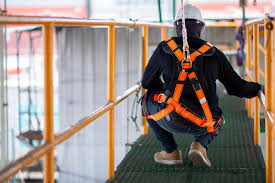
Working at height carries some of the most serious risks faced by UK workers, and a person’s health has a direct bearing on how safely they can do it. A working at height medical is a health check that determines whether a worker is physically and mentally fit to perform tasks at elevated levels. This guide explains the medical requirements that sit alongside the Work at Height Regulations 2005, what a fitness assessment covers, how certification works, and how to keep compliance current — so employers in construction, telecommunications, utilities and maintenance can protect their people and meet their legal duties.
Understanding working at height medical requirements
Working at height poses serious risks to employees across many industries, and employers must protect their workers from falls and injuries by following proper safety rules. A working at height medical is a mandatory health check that determines whether workers are physically and mentally fit to safely perform tasks at elevated levels.
The Work at Height Regulations 2005 require employers to prevent deaths and injuries from falls. These rules apply to anyone who controls work at height, including building owners and facilities managers. Medical assessments help identify health conditions that could affect a worker’s ability to work safely at height — examining aspects such as vision, hearing, lung function and balance. Different jobs at height may require different levels of assessment, and industries like construction, telecommunications and utilities commonly require these medicals to keep workers safe and meet legal requirements.
What counts as working at height? Working at height refers to any task performed where a person could fall and sustain an injury — work on ladders, scaffolding, roofs or elevated platforms. The Work at Height Regulations 2005 define this broadly: it covers any situation where workers could fall from their current position to a lower level. The definition applies regardless of the actual height involved, so even working on a chair or small stepladder counts. Common examples include construction work on buildings, window cleaning, tree surgery, maintenance of street lighting and telecommunications tower work.
Why medical clearance matters. Medical clearance helps prevent accidents by identifying health conditions that could cause a fall — for example heart conditions causing fainting, diabetes leading to blood sugar drops, balance disorders affecting stability, or vision problems reducing spatial awareness. Falls from height remain one of the most common causes of workplace deaths, and a medical assessment helps identify these risks before an accident occurs. Employers also have legal duties under health and safety law to ensure workers are medically fit for height work, and to avoid prosecution for non-compliance.
Who needs a working at height medical? Several worker categories typically require assessment before performing height work, including construction workers, window cleaners, maintenance staff who access roofs, telecommunications engineers, and tree surgeons. Pre-employment medicals are common for new workers, while existing employees may need regular checks depending on age and medical history. Workers taking certain medications — those that can affect balance, concentration or cause drowsiness — also require assessment. The level of scrutiny usually matches the level of risk, so higher-risk activities may demand more detailed evaluations than basic ladder work.
Legal and regulatory framework
The Work at Height Regulations 2005 form the primary legislation governing work at height in the UK. They establish clear duties for employers and employees, and integrate with broader health and safety legislation to create comprehensive protection standards.
Work at Height Regulations 2005 overview. These regulations are the cornerstone of UK height safety legislation and apply to all work where there is a risk of a fall liable to cause personal injury, regardless of the actual height involved. They focus on proactive risk management rather than reactive protection — requiring employers to assess risks, plan work properly, and ensure employees remain competent and fit for height-related tasks. Key requirements include risk assessments for all height-related activities, proper planning and organisation of the work, and ensuring workers are fit to carry it out.
Wider health and safety legislation. The regulations operate within the broader framework of UK health and safety law. The Health and Safety at Work etc. Act 1974 provides the foundational legal structure, establishing general duties to secure the health, safety and welfare of persons at work and to protect employees and others against risks connected with work activities. Enforcement sits with the Health and Safety Executive (HSE), which has authority to investigate incidents, issue improvement notices and pursue prosecutions for non-compliance.
Other relevant legislation works alongside these rules to set minimum requirements for risk assessment, training and equipment provision:
- Management of Health and Safety at Work Regulations 1999
- Construction (Design and Management) Regulations 2015
- Personal Protective Equipment at Work Regulations 1992
Employer and employee responsibilities. Employers bear primary responsibility for ensuring fitness for work at height. Their duties include arranging assessments before permitting height work, ensuring workers are medically fit for their roles, maintaining records of certification, and arranging additional assessments where age, fitness or medical history changes. Employees have corresponding obligations: they must cooperate with assessment requirements, attend when asked, provide honest information, report any health changes between assessments, and follow medical advice and restrictions. Workers should not carry out height-related activities without valid medical clearance, and they have a duty to raise concerns about their own or colleagues’ fitness. Failure to comply can lead to compensation claims and prosecution if accidents occur due to inadequate assessment.
What is involved in a working at height medical assessment
A working at height medical assessment includes several health checks to confirm a worker can safely perform tasks at elevated levels. These typically examine physical health, sensory functions, balance and psychological factors.
General health checks. General examinations form the foundation of the assessment. Healthcare professionals measure basic vital signs — weight, height, BMI and pulse rate — to gauge overall fitness, and check the cardiovascular system for conditions that might cause sudden loss of consciousness or impaired judgment at height. Common measurements include:
- Blood pressure monitoring and heart rate assessment
- Body mass index calculation
- Blood glucose testing (often via finger-prick samples) to identify diabetes
- Cholesterol screening to assess cardiovascular health
- Urine analysis for proteins and sugars to detect kidney problems or diabetes
Vision and hearing tests. Vision examinations assess visual acuity, depth perception and peripheral vision so workers can safely navigate elevated environments; colour vision testing may be required for roles where safety colours and warning signals must be distinguished. Hearing is equally important — workers need to respond to warning calls, equipment sounds and instructions from colleagues below. Audiometry measures hearing across different frequencies, and the assessment also helps flag balance-related inner-ear issues that can affect stability at height.
Musculoskeletal and balance examinations. Musculoskeletal assessments evaluate the strength, flexibility and stability needed for safe height work, examining joints, muscles, bones, spine and posture. Balance testing is particularly important: professionals assess the ability to maintain stability in various positions and check for conditions such as vertigo or dizziness, which can be dangerous on scaffolding, rooftops and other elevated surfaces. The examination also identifies physical limitations that might prevent safe use of safety equipment or emergency procedures.
Medical history and psychological evaluation. A detailed medical history questionnaire captures previous illnesses, medications and ongoing treatments. Psychological factors are also considered, including anxiety and stress levels, fear of heights (acrophobia), concentration and decision-making capacity. Current medications are reviewed carefully because some can cause dizziness or drowsiness, and previous workplace injuries are examined as they may indicate ongoing physical or psychological issues. Lifestyle factors such as sleep patterns, alcohol consumption and general fitness are taken into account too.
Role of occupational health in working at height
Occupational health professionals conduct the assessments that determine whether workers can safely perform tasks at height, helping employers meet their legal duties while protecting employee wellbeing.
The assessment process. Qualified clinicians follow a structured approach. They begin with a complete medical history review to identify existing conditions, medications or past injuries that could affect balance or judgment, then carry out physical examinations covering vision and hearing, cardiovascular evaluation, blood pressure and pulse monitoring, balance and vertigo testing, and musculoskeletal assessment. Specialised tests measure specific functions — audiometry for hearing, spirometry for lung function, and blood tests to screen for diabetes or other conditions. Mental health screening examines psychological fitness, after which the clinician reviews all results together to consider how different factors might combine to create risk.
Services for employers. Occupational health services give employers comprehensive support to meet their duties. Pre-employment medicals screen new workers before height-related duties begin; annual health surveillance monitors existing employees’ ongoing fitness; and tailored fitness assessments reflect the demands of specific roles — a scaffolder needs different checks from a window cleaner or telecoms engineer. Clinicians also provide expert advice, explaining findings in practical terms, and support risk management by identifying workplace health hazards and recommending control measures.
Certifying fitness for height work. Medical certification confirms a worker meets the health standards for their specific duties. Certificates specify the types of height work the individual can safely perform; some workers receive full clearance while others get restricted certificates with limitations. Valid certification periods typically last 12 months for most workers, with some higher-risk roles reviewed every 6 months. Certificate conditions might include maximum working-height limits, requirements for additional safety equipment, regular health monitoring intervals, or medication review schedules. Failed assessments result in temporary or permanent exclusion from height work, and appeals processes allow workers to challenge decisions through independent medical review. Employers must keep certification records current and accessible to demonstrate compliance and track renewals.
Ensuring ongoing health and safety compliance
Maintaining compliance requires regular assessments, proper documentation and clear procedures for addressing health changes. Together these protect workers and meet legal obligations.
Frequency of assessments. Medical assessments for working at height are usually carried out annually for most employees, with the exact frequency depending on age, medical history and job requirements. Employees over 40 may need more frequent assessments, and those with existing health conditions often require six-monthly evaluations. Employers must track assessment dates for each worker — a missed assessment can mean removal from height work until the worker is cleared — and some conditions, such as heart problems, vision changes or balance issues, trigger immediate reassessment before a return to work.
Record-keeping and certification. Employers must maintain detailed records of all assessments as proof of compliance during inspections. Essential documentation includes medical certificates showing fitness for work, assessment dates and results, any restrictions or conditions noted, and follow-up appointment schedules. Records should be stored securely for a minimum of three years, with digital systems helping to track multiple employees and send renewal reminders. Each worker should receive a copy of their certificate, which must be available on-site during height work; expired certificates immediately disqualify workers until renewal.
Addressing health changes and incidents. Workers must report health changes that could affect their ability to work safely at height — new medications, medical diagnoses or physical limitations — and employers should establish clear reporting procedures so people know who to contact. Common changes requiring reassessment include new prescriptions causing dizziness, deterioration in vision or hearing, heart or blood pressure changes, and musculoskeletal injuries. Following any fall or near-miss, affected workers need immediate medical evaluation to determine fitness to return. Temporary health issues may warrant restricted duties or suitable alternative tasks during recovery rather than complete suspension.
Industry-specific considerations and best practices
Different industries present unique challenges for working at height medical assessments. Requirements vary based on the specific role, the environment and the level of risk exposure.
High-risk roles and environments. Construction workers face some of the highest risk because of constantly changing environments and equipment, and require comprehensive assessments focused on balance, vision and cardiovascular health. Telecommunications engineers working on tall masts and towers need enhanced hearing assessments and precise coordination, with wind and weather adding further considerations. Window cleaners encounter risks from suspended platforms and cherry pickers, so their medicals evaluate fear of heights, balance and the musculoskeletal demands of repetitive work. Offshore workers on oil rigs and wind farms face extreme weather, so their medicals include cold-weather tolerance and emergency response capabilities, demanding higher physical fitness standards.
| Industry | Key medical focus areas | Frequency |
|---|---|---|
| Construction | Balance, vision, cardiovascular | Annual |
| Telecommunications | Hearing, coordination, vertigo screening | Annual |
| Utilities | Electrical hazard awareness, fitness | Biannual |
| Maintenance | Confined space clearance, respiratory | Annual |
Other role-specific requirements. Steeplejacks and tower climbers require enhanced cardiovascular assessments because they climb significant heights without mechanical assistance, where heart conditions pose severe risks. Aircraft maintenance engineers need specific vision standards, including colour vision, as they work around moving parts and electrical systems. Roofers require comprehensive musculoskeletal evaluations because they carry heavy materials on sloped surfaces, and previous back injuries significantly affect their ability to work safely.
Integration with wider safety programmes. Working at height medical assessments should connect with broader health and safety initiatives. Results should feed into risk assessments and safety training, training schedules should align with medical review dates, and regular monitoring between formal assessments helps identify emerging issues — supervisors watching for signs of vertigo, fatigue or balance problems. Emergency response procedures should account for individual medical conditions, and trends in medical findings can highlight equipment needs or training gaps, creating a feedback loop that improves overall workplace safety.
Sources & references
- Work at Height Regulations 2005 — the primary legislation governing work at height in the UK
- Health and Safety at Work etc. Act 1974 — foundational workplace health and safety duties
- Management of Health and Safety at Work Regulations 1999
- Construction (Design and Management) Regulations 2015
- Personal Protective Equipment at Work Regulations 1992
- Health and Safety Executive (HSE) — enforcement, guidance and inspection
Make sure everyone who works at height understands the risks and the rules.
Train your team to work safely at height →
Mark writes about working at height safety, compliance and accredited training for Working at Heights Course, part of Online CPD Academy.